
Peer-Reviewed Scientific Validation
Grounded in decades of analytical chemistry, laser-tissue interaction physics, and mass spectrometry innovation and backed by peer-reviewed literature, conference presentations, and federal R&D grants.
Grant-Funded R&D & Commercialization Track Record
Active Company R&D (Laser Bioanalytics LLC)
NIH SBIR Phase I Award (Active / Funded): Photochemical Tissue Processing for MALDI Mass Spectrometry Imaging — Validating spatially resolved on-tissue photochemical modification for lipid double-bond localization and structural isomer mapping. (Award #GM156259)
Founder SBIR/STTR Track Record ($5.25M in Phase I & II Awards)
Compact Tunable IR Lasers for MALDI: Phase I and Phase II ( A Compact Tunable Infrared Laser for MALDI MS ).
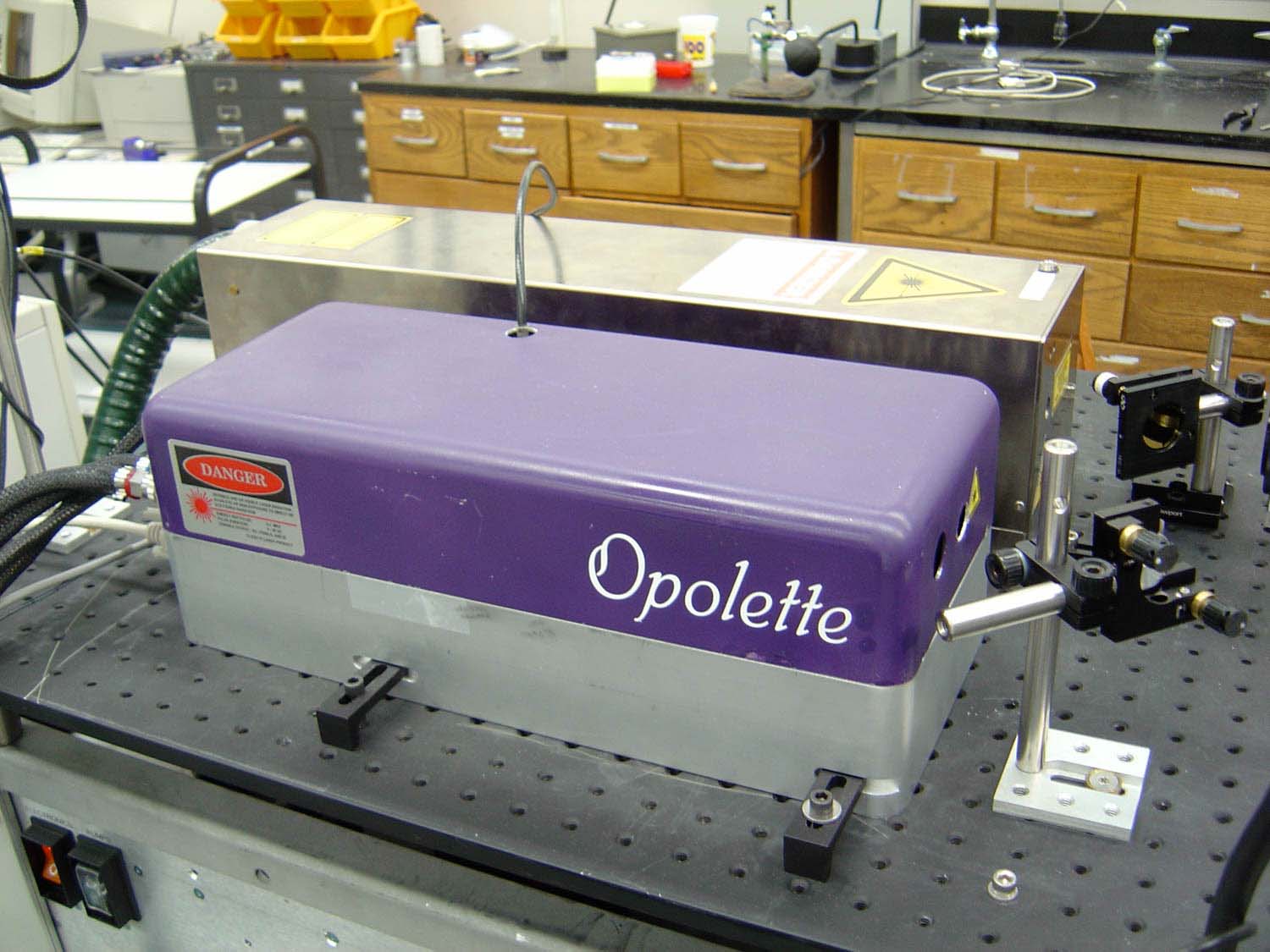
High-Repetition-Rate IR Lasers for MS: Phase I and Phase II ( A High-Repetition-Rate IR Laser for Mass Spectrometry ).
Single-Cell Nanoscale Laser Ablation MS:Infrared Laser Desorption Ion Mobility MS: Phase I and Phase II ( Infrared Laser Desorption Ion Mobility Mass Spectrometer ). Phase I ( Single Cell Chemical Imaging via Nanoscale IR Ablation – Mass Spectrometry ) and Phase II ( Single Cell Analysis via Nanoscale Tip-Enhanced Laser Ablation Mass Spectrometry ).
Core Research Areas
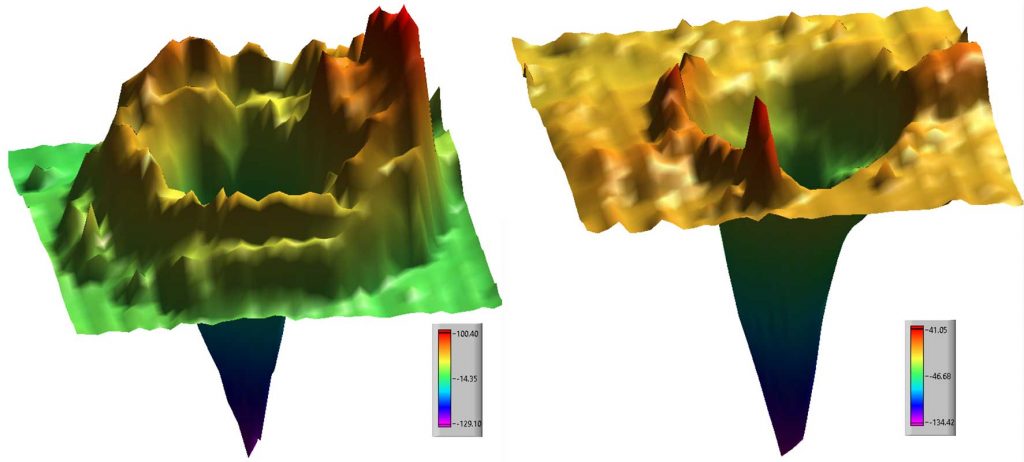
mid-infrared laser ablation microdissection
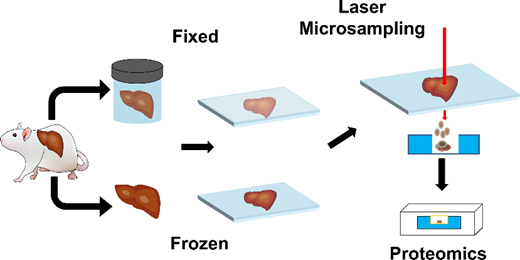
Non-thermal, mid-infrared laser desorption/ablation coupled with native mass spectrometry and ion mobility spectrometry. Proves mid-infrared pulses ablate biomolecules without thermal denaturation, keeping fragile non-covalent protein complexes intact.
- Feizi, N.; Egbejiogu, B. C.; Hines, K. B.; Hayes, K. O.; Murray, K. K.; Shaw, B. F.; Conforti, J. M.; Gallagher, E. S.; Solouki, T. Are Native Conformations of Proteins Retained Throughout Laser Ablation Capture? Anal. Chem. 2026, 98 (31), 22636-22646.
- Egbejiogu, B. C.; Donnarumma, F.; Murray, K. K. Infrared Laser Ablation and Capture of Formalin-Fixed Paraffin-Embedded Tissue. J. Am. Soc. Mass. Spectrom. 2024, 35 (12), 2993-3001.
- Villacob, R. A.; Egbejiogu, B. C.; Feizi, N.; Hogan, C.; Murray, K. K.; Solouki, T. Native Mass Spectrometry and Collision-Induced Unfolding of Laser-Ablated Proteins. J. Am. Soc. Mass. Spectrom. 2022, 33 (12), 2215-2225.
- K. Wang, F. Donnarumma, S.W. Herke, C. Dong, P.F. Herke, K.K. Murray, RNA sampling from tissue sections using infrared laser ablation, Anal. Chim. Acta. 1063 (2019) 91–98. doi:10.116/j.aca.2019.02.054.
Deep ultraviolet laser ablation Microdissection
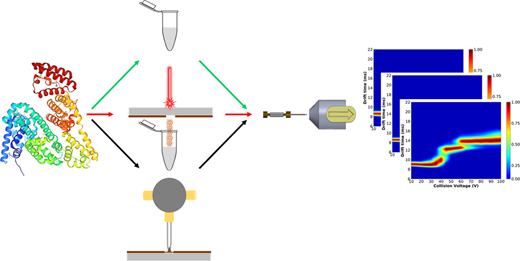
Non-thermal, short-wavelength laser desorption/ablation coupled with native mass spectrometry and ion mobility spectrometry. Proves high-photon-energy DUV pulses ablate biomolecules without thermal denaturation, keeping fragile non-covalent protein complexes intact.
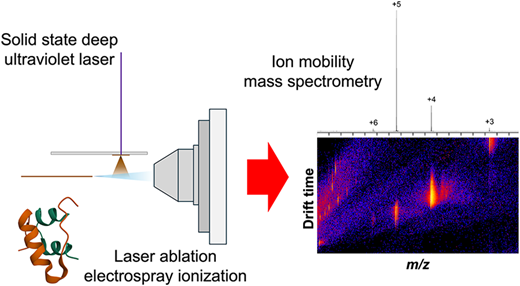
- Hines, K. B.; Feizi, N.; Solouki, T.; Murray, K. K. Deep Ultraviolet Laser Ablation Electrospray Ion Mobility Mass Spectrometry. J. Am. Soc. Mass. Spectrom. 2026, 37 (2), 532-538.
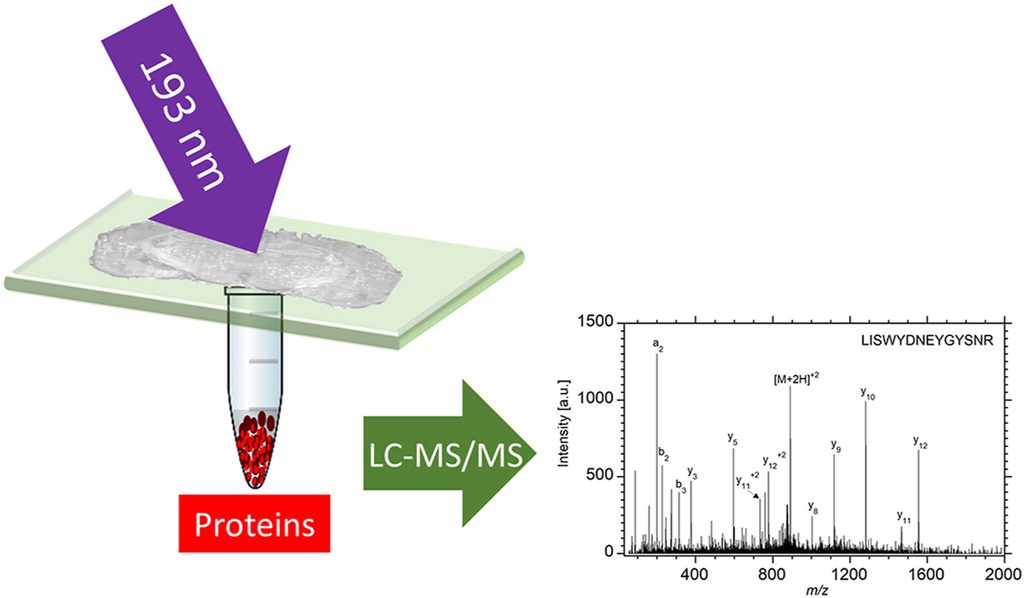
- Lawal, R. O.; Richardson, L. T.; Dong, C.; Donnarumma, F.; Solouki, T.; Murray, K. K. Deep-ultraviolet laser ablation sampling for proteomic analysis of tissue. Anal. Chim. Acta 2021, 1184, 339021.
- Murray, Kermit, K., Donnarumma, F., & Lawai, O. Devices and methods for deep UV laser ablation (2021); Louisiana State University, assignee; US Patent No. US 11094518 B2.
Photochemical Tissue Processing
- ASMS 2026: Photochemical Tissue Processing for MALDI Lipid Imaging

Collaborative Research & Beta Validation
We actively collaborate with academic mass spectrometry laboratories, core facilities, and clinical researchers to validate new tissue matrices, benchmark analytical sensitivity, and co-develop NIH SBIR/STTR Phase I and Phase II proposals.