Technology and products under development at Laser Bioanalytics
Photochemical Tissue Processor
Photochemical tissue modification for imaging mass spectrometry structure determination.
Matrix-assisted laser desorption/ionization (MALDI) is a soft ionization technique used in mass spectrometry to analyze fragile, high-molecular-weight molecules, such as proteins, peptides, and synthetic polymers, with minimal fragmentation. MALDI imaging uses this method to map the spatial distribution of biomolecules in thin tissue sections. The photochemical imaging mass spectrometry (PIMS) system uses laser-driven photochemical reactions to label biomolecules in the tissue to enhance structure and identification.
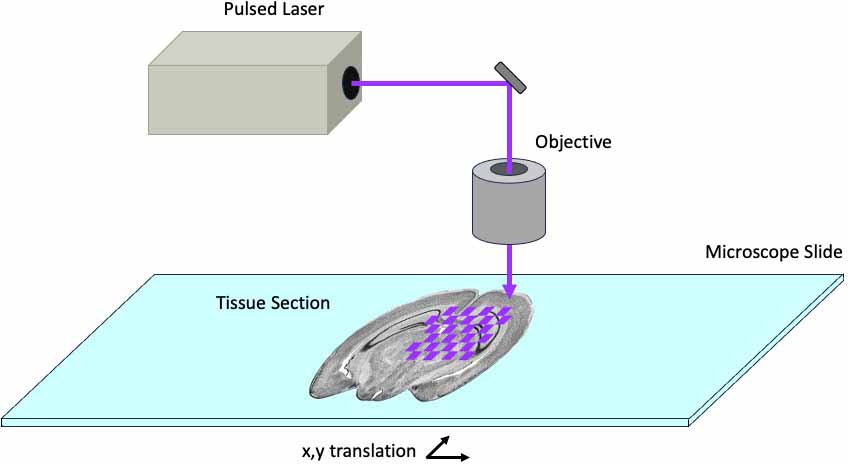
Determining the structure of lipids in tissue is important to understanding biological systems and diagnosing and treating diseases. The photochemical imaging mass spectrometry (PIMS) system is a new device for patterned photochemical modification of lipids in tissue to enhance structure determination by imaging mass spectrometry. The system uses pulsed ultraviolet and visible laser beams to drive photochemical reactions in tissue that allow the structure and distribution of lipids in tissue sections to be determined.
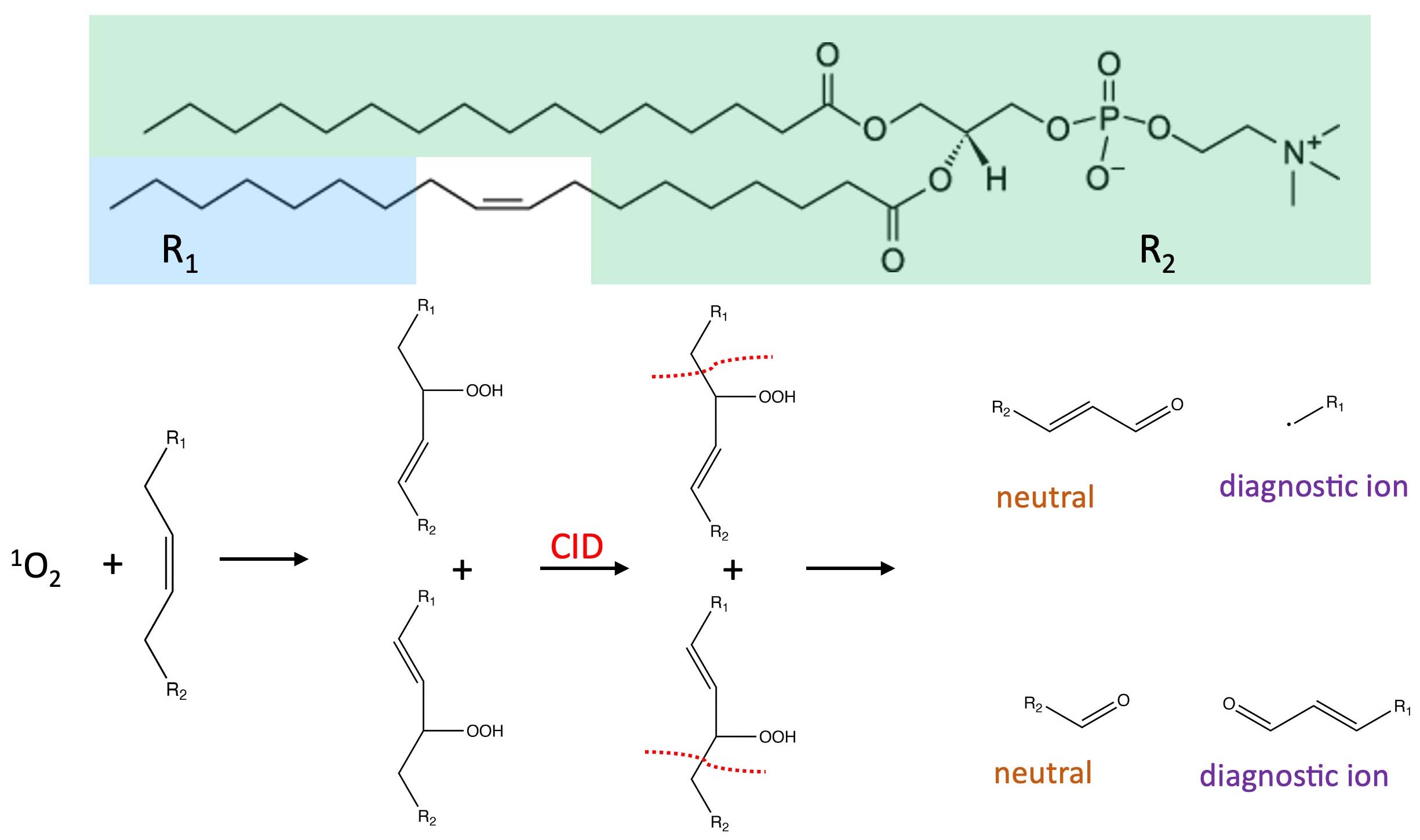
of a photosensitizer and the reaction products lead
to diagnostic ion formation in tandem mass spectrometry.
Pulsed laser irradiation of singlet oxygen phosensitizer creates hydroperoxide products that help pinpoint double bond location in unsaturated lipids using tandem mass spectrometry.
This project is funded by the National Institutes of Health project number 1R43GM156259-01, “Photochemical Tissue Modification for MALDI Mass Spectrometry Imaging”
Deep Ultraviolet Laser Ablation Microdissection
A high precision laser microdissection system that uses deep ultraviolet “cold” laser ablation for ultra-precise biomolecule sampling.
Laser eye surgery uses deep ultraviolet lasers for their ability to precisely ablate tissue with minimal damage this technology is not used in commercial laser microdissection systems currently. We are developing a new laser microdissection system that uses a solid state deep ultraviolet laser for precision tissue microdissection.
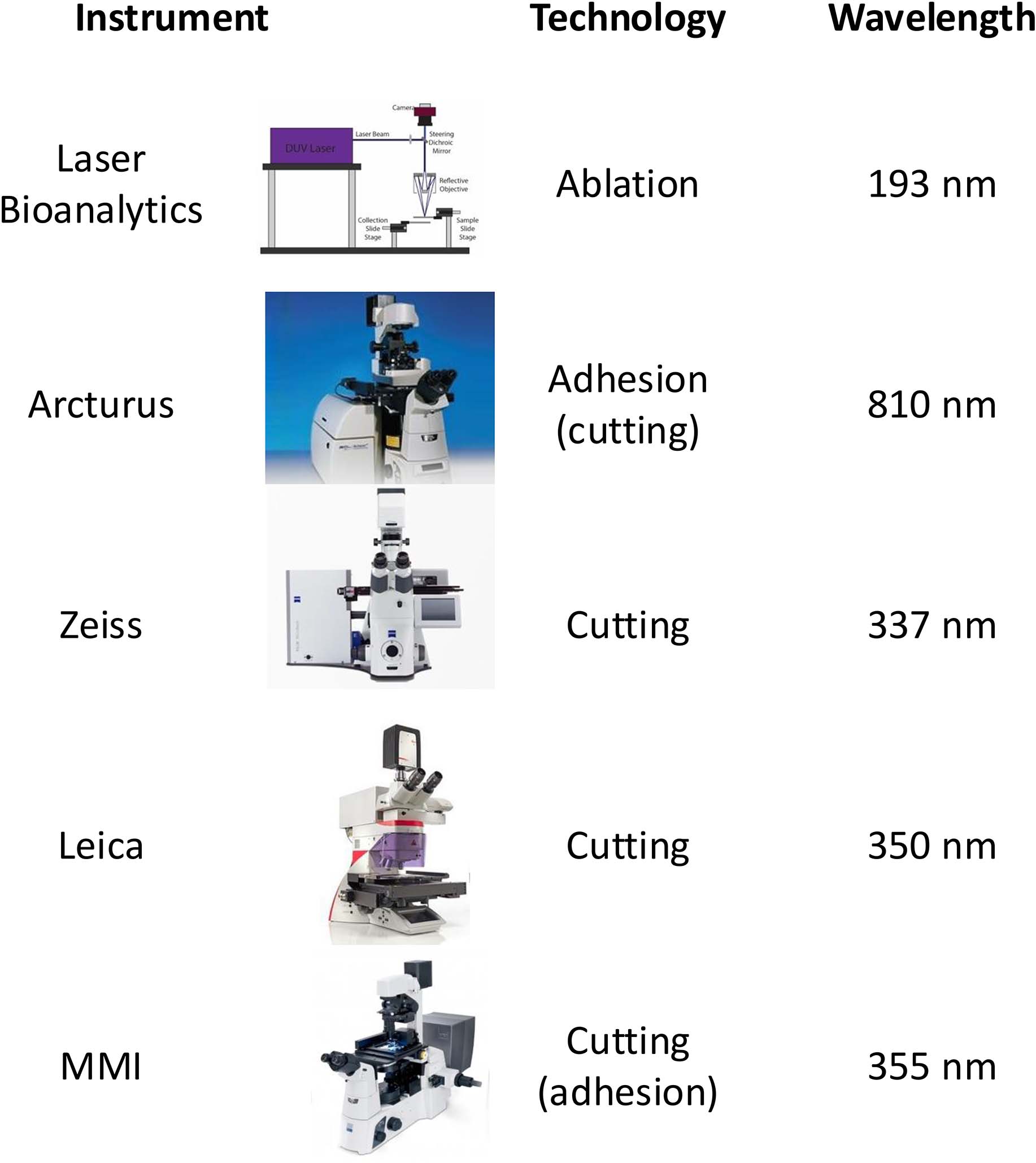
Currently commercial laser microdissection instruments use two methods for tissue region excision: laser cutting and tissue adhesion. Laser cutting uses a focused high energy laser to obliterate tissue at the perimeter of a tissue region of interest to separate a small solid mass of tissue from its surroundings. The isolated piece is separated from the bulk by an additional laser pulse or film adhesion. The high laser energy used for cutting can damage the tissue adjacent to the cut line and lysis and additional separation steps are required for extraction of biomolecules from the intact tissue pieces.
Adhesion laser microdissection methods typically use laser melting which involves heating that can disrupt weak biomolecule interactions. Furthermore, adhesion of the tissue components to the polymer film can limit the extraction efficiency.
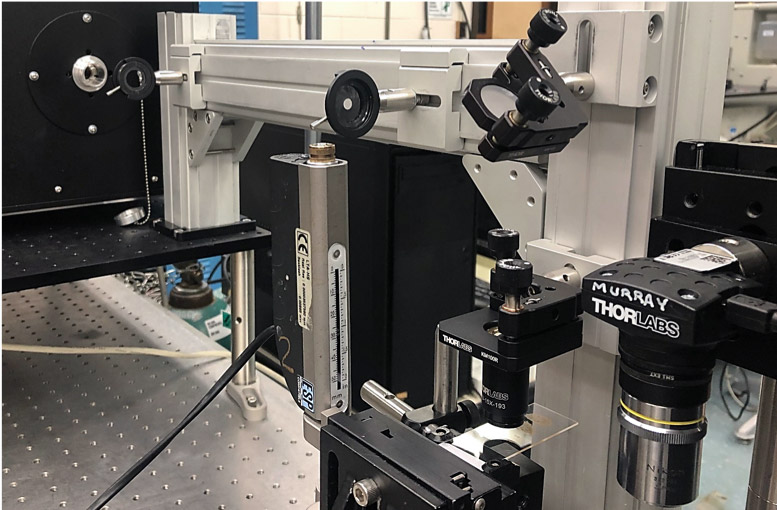
The Laser Bioanalytics deep ultraviolet laser ablaton microdissection system (DUV-LAM) uses the “cold” deep UV ablation method and irradiates the tissue spot by spot to disrupt the structure and eject the tissue components in the plume of ejected particulate material. The collected biomolecules are efficiently extracted and do not experience fragmentation or disruption of weak interactions.
The technology used in this instrument is covered in part by Murray, K., Donnarumma, F., & Lawai, O. (2021). Devices and Methods For Deep UV Laser Ablation.
Photochemical Laser Microdissection
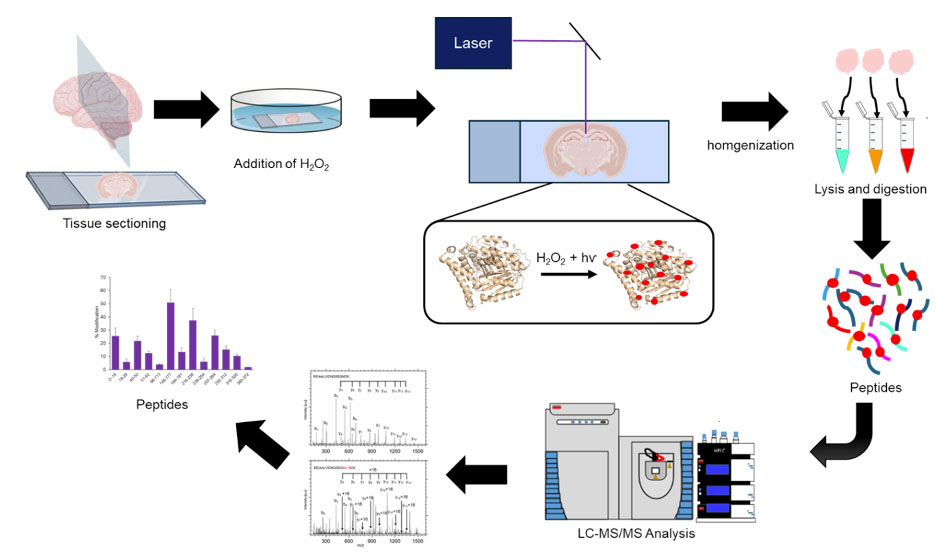
Combined laser photochemistry and laser ablation microdissection for protein structure determination.
Laser microdissection is used to isolate specific, pure populations of cells from a tissue sections. By physically separating cells of interest from surrounding normal or stromal tissue, researchers can perform high-purity molecular analysis (DNA, RNA, or protein) that would otherwise be diluted by unwanted cell types. This Laser Bioanalytics system combines laser photochemistry with laser microdissection.
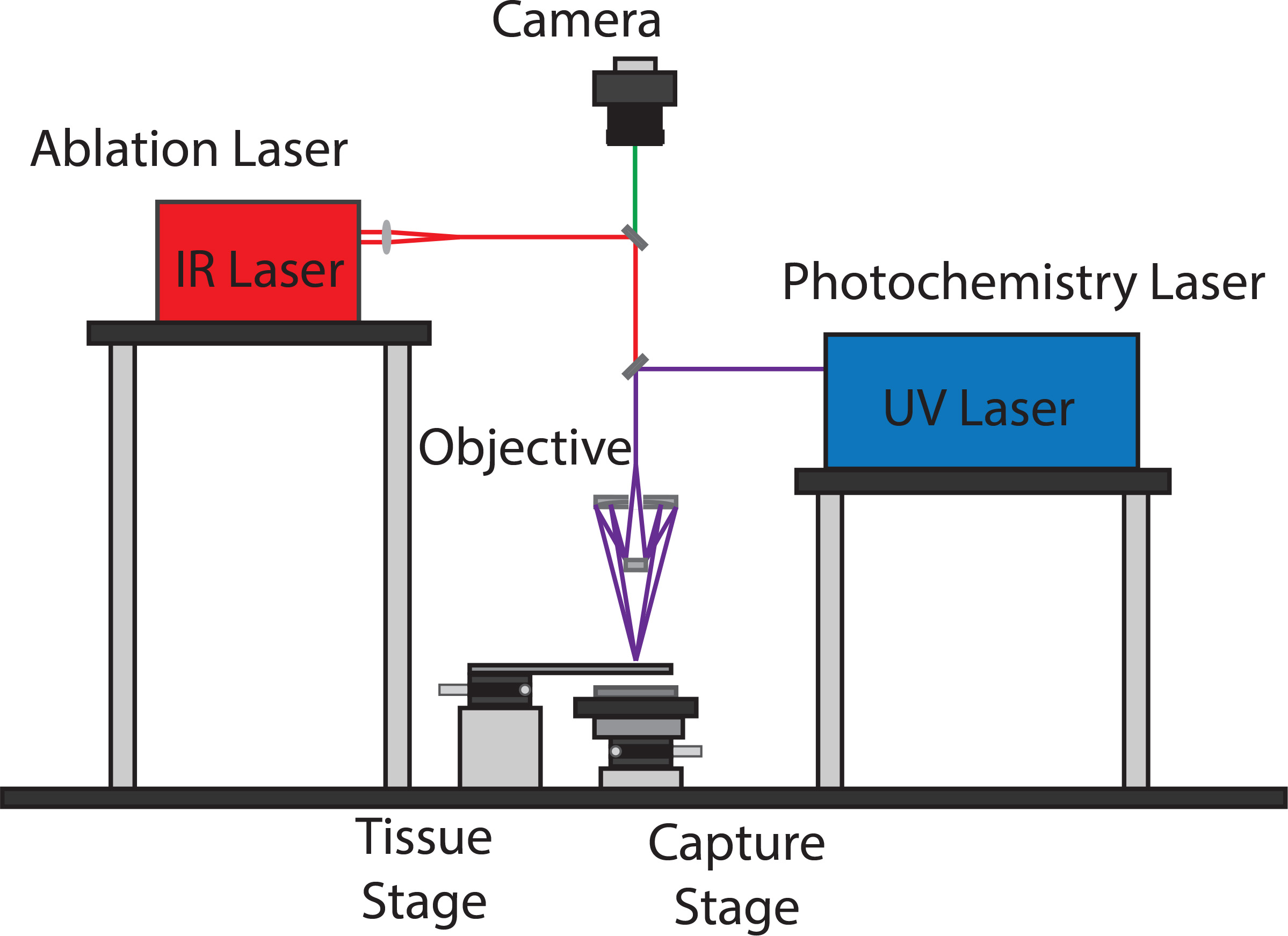
The photochemical laser ablation microdissection (PC-LAM) system uses a novel infrared laser ablation microdissection microscope for fast and efficient selection and collection of biomolecules from tissue sections. A pulsed ultraviolet laser is used to initiate photochemical reactions in tissue sections for selective labeling of biomolecules. The reactions are rapidly quenched, and the modified biomolecules processed to obtain structural information.